
English 

+86-158-5501-9595
leizhang112@126.com
leizhang112@126.com
No. 8, Lanzhou Road, Su-Chu Modern Industrial Park, Chuzhou City, Anhui Province


Views: 0 Author: Site Editor Publish Time: 2026-10-16 Origin: Site


Designing a refrigerator manufacturing plant demands precise engineering decisions. Balancing capital expenditure against desired production capacity remains a core manufacturing challenge when specifying a refrigerator foaming line. Plant managers face intense pressure to get these layout parameters correct on the very first try. The polyurethane curing process acts as the ultimate production bottleneck. It dictates the physical footprint and equipment volume of the entire plant. If you miscalculate the curing cycle, you risk either starving the assembly line or wasting valuable floor space. We built this guide to provide plant managers and production engineers with an objective framework. You will learn to calculate exact fixture requirements and select the right line layout for your specific floor plan. Ultimately, this approach helps you avoid over-capitalizing on unnecessary hardware while ensuring you can consistently hit target production yields.
The required number of fixtures is mathematically derived by dividing the PU foam curing time by the target production line takt time.
Your choice between stationary layouts and rotary systems directly impacts both the quantity of cabinet foaming fixtures and total floor space utilization.
Optimized PU foaming mold temperature control can reduce curing times, thereby lowering the total number of fixtures required to hit shift targets.
Evaluating a supplier requires looking beyond upfront costs to assess cycle-time guarantees, automation compatibility, and maintenance downtime.
Every plant layout begins with a fundamental mathematical calculation. You cannot guess how much equipment you need. We rely on a proven industrial engineering formula to dictate layout decisions. This primary equation determines the exact volume of hardware required for continuous operations.
The primary calculation is: Total Fixtures = (Curing Time + Load/Unload Time) / Target Takt Time.
To execute this formula properly, you must establish accurate inputs. Here are the core steps to determine your exact numbers:
Define Target Volume: Determine the total number of cabinets you intend to produce annually.
Calculate Available Hours: Factor in shifts, holidays, and planned maintenance schedules.
Determine Takt Time: Divide available working hours by your target annual volume.
Measure Cycle Stages: Time the precise duration required to load the cabinet, inject the chemicals, and extract the finished product.
Your target takt time acts as the rhythmic heartbeat of your production facility. For example, if your market demands 300,000 units annually across 4,000 working hours, your line must produce one refrigerator roughly every 48 seconds. Every subsequent engineering decision must align with this 48-second cadence.
However, the curing process introduces a severe bottleneck. Standard rigid polyurethane foam demands specific chemical reactions to achieve proper insulation properties. It requires between 3 to 6 minutes to cure fully. This duration depends heavily on your chemical formulation, cabinet wall thickness, and ambient plant conditions. Because the curing time far exceeds a typical 48-second takt time, you need multiple fixtures operating simultaneously to bridge the gap.
Furthermore, theoretical math rarely survives real-world plant floor conditions. Production engineers must build buffer allowances into their procurement plans. We recommend adding 10-15% equipment redundancy to your final calculation. You need this buffer to account for routine maintenance, mandatory chemical purge cycles, and minor operational delays. Without redundancy, a single PU foaming fixture going offline will immediately halt your master assembly line.
Once you calculate your baseline equipment volume, your next major decision involves spatial orientation. The way you arrange your fixtures drastically alters both your operator workflow and your physical factory footprint.
Stationary layouts assign one fixed position to each unit. They remain bolted to the factory floor while chemical mixing heads or human operators move between them. These setups are best suited for high-mix, low-volume production environments. If your facility features an irregular floor plan with structural pillars, stationary arrangements offer maximum flexibility. However, this layout requires a strict 1:1 ratio of active pouring stations to fixtures. While highly scalable, stationary lines demand more manual operator intervention. To automate them, you must install complex, wide-spanning robotic gantry systems.
Conversely, rotary foaming lines organize the hardware into a massive revolving carousel. These circular systems excel at high-volume, standardized production. Facilities producing standard domestic refrigerators almost exclusively rely on them. When you select a carousel layout, your fixture impact changes entirely. The design dictates a fixed number of stations upfront. Manufacturers typically build these as 6, 8, or 10-station carousels.
In a rotary system, the entire carousel indexes simultaneously. It moves based on the slowest process in the sequence, which is always the chemical curing stage. Therefore, your equipment count becomes hard-coded into the line design during the initial procurement phase. You cannot simply bolt on an extra cabinet foaming fixture later if production demands increase.
Feature | Stationary Layouts | Rotary (Carousel) Systems |
|---|---|---|
Best Application | High-mix, low-volume production | High-volume, standardized models |
Scalability | High (Can add individual stations) | Low (Fixed station count) |
Space Utilization | Flexible (Adapts to irregular floors) | Rigid (Requires large open squares) |
Automation Complexity | High (Requires robotic gantries) | Low (Fixed central pour point) |
You must carefully weigh these layout options. Selecting a rotary system restricts future flexibility but offers unmatched output speed for standardized appliances. Stationary layouts let you start small but consume vast amounts of linear floor space as you scale.
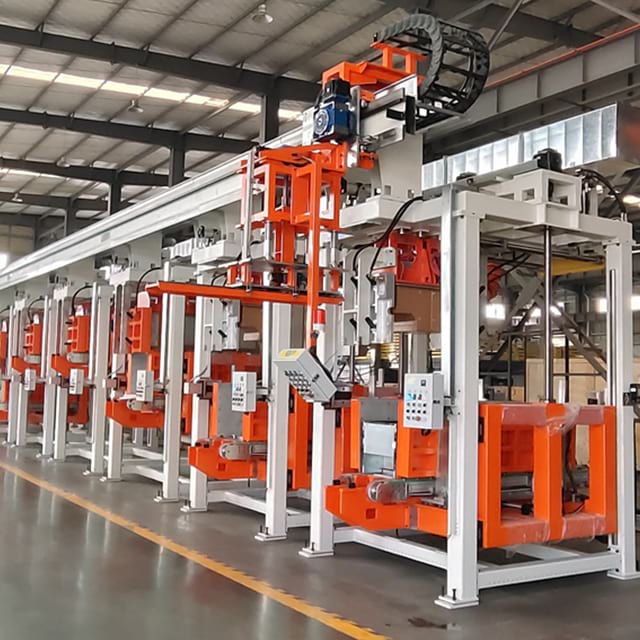
Reducing curing time directly decreases the amount of capital equipment you need to purchase. The secret to accelerating this process lies in advanced thermal management. Precise water heating systems embedded within the mold structure significantly accelerate the chemical cross-linking of the foam. By safely raising the internal temperature, you speed up the exothermic reaction. This shortens the time the cabinet must remain clamped shut. Faster cycles mean fewer stations are required to maintain your takt time.
However, you cannot arbitrarily slash curing times without facing severe physical consequences. Structural deflection remains a constant threat on the factory floor. The foaming process generates intense internal pressure. If you remove a cabinet from the support structure too early, the expanding gases will deform the appliance walls.
High-quality engineering prevents this deformation. Your equipment must hold dimensional tolerances tightly during peak exothermic expansion. The hydraulic cylinders and locking mechanisms must resist tons of outward pressure without yielding a single millimeter. If the locking jaws flex, the refrigerator cabinet bows outward, resulting in scrapped parts and wasted chemical materials.
When selecting your hardware, you face a critical cost-benefit analysis regarding standardization versus customization. Do you purchase dedicated equipment for every single appliance model? Or do you invest in universal base systems?
Universal systems utilize interchangeable internal blocks. You install a primary structural frame, and operators swap out the internal PU Foaming Mold components whenever they change product sizes. This approach saves massive amounts of capital upfront. However, you must carefully calculate the changeover downtime. If swapping out the internal blocks takes two hours, that lost production time might negate the initial capital savings. You must analyze your daily product mix to determine which design philosophy fits your actual operational reality.
Theoretical calculations often collide with the harsh realities of physical plant constraints. The physical dimensions of the machinery strictly dictate your broader factory layout. A mathematical requirement for 12 large clamping stations might easily exceed your available linear floor space. When physical space runs out, engineering teams must pivot.
This limitation often forces a shift toward multi-level layouts or rotary designs. You must measure your factory ceiling heights and aisle widths before finalizing any equipment counts. A dense cluster of hardware also creates logistical nightmares for forklift traffic and material feeding routes.
Furthermore, your equipment volume directly impacts the complexity of automated pouring integration. The chemical mixing head must deliver precise liquid ratios to every active station. If you have numerous distributed stationary setups, you require significantly longer chemical piping networks.
Longer piping runs introduce severe manufacturing risks. They increase fluid pressure drops across the delivery lines. This can lead to improper chemical mixing and off-ratio foam. Additionally, extended piping systems increase maintenance burdens and raise the likelihood of costly chemical leaks. Keeping the footprint compact ensures more consistent chemical delivery.
Energy consumption serves as another hidden operational reality. Buyers often underestimate the utility requirements of a fully operational line. Each active station demands continuous power. You must supply electricity for continuous water heating, compressed air for pneumatic clamping systems, and dedicated circuits for safety interlocks. When you multiply these utility draws across 10 or 12 stations, your electrical infrastructure requirements surge. You must consult with your facility electrical engineers to ensure the local grid can support the cumulative draw during peak production cycles.
Procuring a massive manufacturing line requires rigorous vendor scrutiny. You are not simply buying raw steel and hydraulics; you are purchasing a specific manufacturing capability. Therefore, evaluating a supplier requires looking far beyond upfront sticker prices.
You must demand strict performance guarantees in writing. Look for suppliers who guarantee specific dimensional stability tolerances and exact cycle times. If a vendor will only guarantee equipment delivery dates but refuses to guarantee the foaming cycle speed, they present a massive financial risk. Hold them accountable for the final product geometry.
Next, deeply assess the availability of service and spare parts. Manufacturing equipment will eventually wear down. The harsh chemical environment degrades components rapidly. You need immediate access to replacement hydraulics, localized heating elements, and specialized mold seals.
Does the supplier warehouse parts domestically?
Do they use proprietary hydraulic fittings, or do they utilize standard off-the-shelf industrial components?
Can their technicians deploy to your facility within 24 hours of a critical failure?
Downtime on one station reduces your entire line capacity proportionally. You cannot wait four weeks for a replacement hydraulic valve to ship overseas.
Always require a proven proof of concept. Do not let your factory serve as a supplier’s beta testing site. Require detailed case studies or physical reference sites. You should expect to see their equipment operating under similar takt times and handling similar chemical formulations. Speak directly with the plant managers at those reference sites to uncover hidden maintenance issues.
Finally, we highly recommend launching a formal pilot phase. Start with a detailed 3D plant simulation and thermal flow analysis. Feed your cabinet CAD data to the equipment manufacturer. Let them simulate the chemical flow and internal pressure distribution before you finalize the total procurement volume. This digital validation prevents costly physical rework once the heavy machinery arrives at your loading dock.
Determining your exact equipment volume relies on strict mathematical calculations bridging chemical realities with production goals. It is never a baseline guess. You must accurately map your desired takt time against the immutable physical limits of chemical curing and thermal dynamics.
Over-investing in unnecessary stations wastes critical capital and consumes valuable factory space. Conversely, under-investing guarantees missed daily quotas, deformed appliances, and immense stress on your assembly teams. The right balance ensures steady flow and protects your margins.
We encourage your engineering teams to compile their target takt times, exact cabinet dimensions, and chemical specifications immediately. Bring this data to trusted equipment manufacturers for a customized layout consultation to ensure your next plant upgrade delivers maximum yield.
A: Generally, it takes 3 to 6 minutes. This timeline is heavily dependent on the insulation thickness, the specific foam density, and the precision of the temperature control systems built into the supporting hardware.
A: Yes, they can accommodate multiple sizes through the use of adjustable side walls or interchangeable core molds. However, you must carefully factor the mechanical changeover time into your overall equipment efficiency (OEE) calculations.
A: Cabinet variants require complex 3D internal support to prevent the main box from collapsing or bowing during intense foam expansion. Door variants are typically flatter, multi-cavity designs that utilize specialized presses to process multiple doors simultaneously.


