
English 

+86-158-5501-9595
leizhang112@126.com
leizhang112@126.com
No. 8, Lanzhou Road, Su-Chu Modern Industrial Park, Chuzhou City, Anhui Province


Views: 0 Author: Site Editor Publish Time: 2026-10-25 Origin: Site


Consumer preference is rapidly shifting toward premium, seamless appliance aesthetics. Homeowners now expect sleek, uninterrupted finishes in modern kitchen spaces. Meanwhile, factory managers face constant pressure to optimize Overall Equipment Effectiveness (OEE). They must maximize throughput while strictly minimizing cosmetic defects. Deciding how to form the outer cabinet architecture becomes a critical engineering choice for any plant manager.
This early manufacturing decision dictates the entire downstream assembly process. It also impacts the polyurethane foaming process and material handling strategies. A poorly aligned choice creates costly bottlenecks and increases unacceptable scrap rates. We present an objective evaluation of transitioning to a single-piece cabinet structure versus maintaining a multi-piece configuration.
You will explore structural, operational, and financial trade-offs in detail. We aim to clarify how each method impacts floor space, labor requirements, and production agility. Read on to discover which manufacturing architecture aligns best with your production volume and aesthetic goals.
Aesthetics & Structure: U-shell designs eliminate top-edge seams, reducing the risk of polyurethane foam leakage and improving premium finish appeal.
Equipment Footprint: Consolidating top and side forming into a single line requires specialized, continuous space but drastically reduces work-in-progress (WIP) buffer zones.
Flexibility vs. Volume: Separate panels offer superior agility for high-mix, low-volume production, while U-shell lines dominate high-volume, standardized model runs.
CapEx Realities: U-shell lines require a higher initial capital expenditure but yield lower per-unit labor costs and higher material handling automation over a 5-to-10-year lifecycle.
To evaluate these two distinct manufacturing philosophies, we must first understand their mechanical frameworks. Cabinet construction sets the baseline for every subsequent step on the factory floor. Plant managers must carefully align process architecture with long-term production goals.
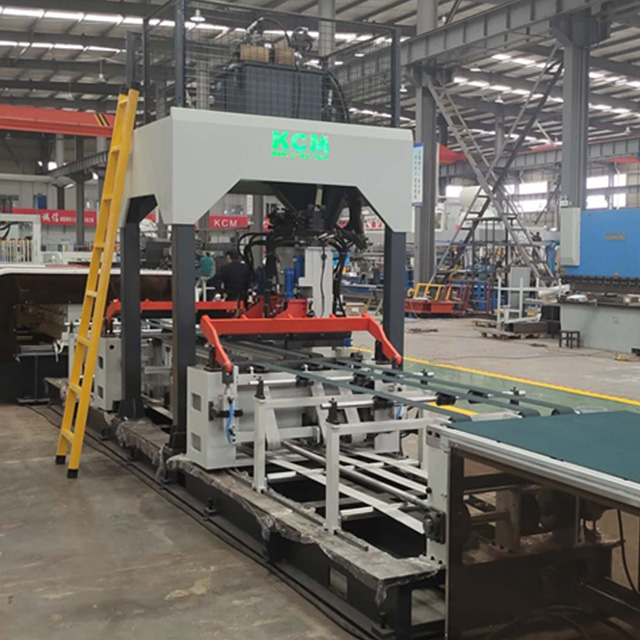
This approach fundamentally transforms flat steel coils into a nearly complete outer cabinet in one continuous motion. The strategy relies on a dedicated refrigerator U shell forming line. This highly synchronized system pulls pre-painted metal, usually Pre-Coated Metal (PCM) or Vinyl Coated Metal (VCM), directly from a master coil. It then punches essential holes, roll-forms the necessary edge profiles, and executes a precise dual-bend sequence.
Because the machine processes a single sheet, it outputs an integrated left-side, top, and right-side structure. The resulting component requires no mechanical joining along the critical top edges. This seamless integration speeds up primary cabinet formation and drastically simplifies subsequent handling.
Conversely, the separate panel approach fragments the cabinet into three distinct components. Facilities utilizing this method deploy independent modular stations. They typically invest in versatile Metal Forming Equipment to stamp and roll each piece individually. A factory might run a dedicated top-cover press alongside a high-speed side panel forming line.
This method fabricates the left and right panels separately from the top cover. Consequently, these flat panels must eventually converge at a downstream assembly station. Workers or robotic arms must physically align the pieces. The plant must then employ mechanical joining techniques. Common joining methods include clinching, spot welding, or inserting specialized screws. All joining must occur before the fragile cabinet enters the heavy foaming fixture.
The chosen methodology dramatically alters the pre-assembly station. A single-piece shell bypasses complex panel-alignment jigs entirely. It flows directly into the foaming department. Separate panels require extensive sub-assembly operations. Factories must maintain buffer zones for each panel type. Furthermore, separate panels rely heavily on foam leakage prevention mechanisms. Workers must frequently apply tapes or sealants over mechanical joints to prevent chemical blow-out during insulation injection.
Cabinet architecture deeply influences product quality and structural durability. The foaming process exerts immense outward pressure on sheet metal. How the cabinet handles this internal stress often determines final factory yield rates.
The most immediate benefit of a continuous shell design is seam reduction. U-shells inherently eliminate the mechanical joint bridging the side and top panels. Traditional multi-piece designs create microscopic gaps at these critical junctions. These gaps cause two primary issues. First, they allow expanding polyurethane insulation foam to leak during high-pressure injection. Foam leakage creates massive rework tasks on the assembly line. Second, mechanical seams create pathways for thermal bridging. Seamless construction naturally enhances the refrigerator's insulation efficiency, aiding in strict energy certification compliance.
Polyurethane foam expansion places immense stress on the metal chassis. Cabinet deformation remains a costly defect in appliance manufacturing. We can break down the foaming stress process into three critical phases:
Injection: Liquid chemicals enter the hollow cabinet cavity rapidly. The internal chassis must hold firm against the initial fluid weight.
Expansion: As the chemicals react, foam expands forcefully in all directions. A continuous piece of folded sheet metal resists outward bowing significantly better than joined flat panels.
Curing: The foam solidifies, locking the structural geometry in place. Higher initial rigidity guarantees precise door alignments post-curing.
A unified shell offers naturally superior torsional rigidity throughout these phases. It reduces reliance on bulky internal support jigs.
Using pre-painted materials requires careful handling. Each approach presents unique cosmetic risks and advantages. The continuous shell method carries significant bending risks. Forming a 90-degree corner on a finished surface requires advanced non-marring tools. Manufacturers must deploy servo-driven tangent benders. These specialized benders prevent cracking, wrinkling, or scratching the high-gloss pre-painted surface. If the bend radius is too sharp, the coating will delaminate.
Separate panels offer a distinct handling advantage here. It is much easier to process, stack, and transport flat panels without risking bend-radius stress. Flat panels rarely experience the concentrated corner forces seen in integrated shells. However, alignment discrepancies during manual assembly frequently cause visible panel gaps. Consumers easily spot uneven top seams, which diminishes the premium brand perception.
Manufacturing velocity defines factory profitability. Plant engineers constantly evaluate how fast a line can run and how quickly it can adapt to new models. We must weigh raw speed against operational flexibility.
A modern continuous forming line redefines volume expectations. These automated systems achieve blistering cycle times. A well-optimized line typically discharges a complete, ready-to-weld structure every 10 to 15 seconds. The machine synchronizes punching, flanging, and bending without human intervention. This output feeds directly into the back-panel insertion station.
Separate lines operate differently. A dedicated side press may punch out a single flat panel faster than 10 seconds. However, flat output creates a false sense of speed. The actual production bottleneck shifts downstream. Manual or robotic assembly stations must gather, align, and join the three disparate pieces. This joining process significantly inflates the actual cycle time per completed cabinet.
Consumer markets demand diverse appliance sizes. Factories must pivot between models quickly to minimize machine downtime.
Separate panel setups remain highly flexible. Changing the cabinet height only requires adjusting the cut-to-length parameters on the roll-former. Because the top cover is fabricated elsewhere, width adjustments merely mean loading a different top-panel batch into the assembly jig. This makes separate configurations ideal for unpredictable production schedules.
Continuous shell lines approach changeovers systematically. Adjusting cabinet depth and height proves relatively simple. Technicians achieve this via automated servo adjustments to the cutting and punching dies. However, changing cabinet width historically posed challenges. A width change requires precise re-positioning of the massive dual bending units. Older hydraulic lines suffered extended downtime during width changes. Fortunately, modern CNC automation now executes these positional shifts swiftly, bridging the flexibility gap.
Comparison of Production Dynamics
Operational Metric | Integrated U-Shell Method | Separate Panel Method |
|---|---|---|
Base Cycle Time | 10–15 seconds per completed shell | Fast individual parts, slow total assembly |
Width Changeover | Moderate to fast (with modern CNC) | Immediate (swap top panel batch) |
Assembly Bottlenecks | Virtually none before back-panel station | High (requires mechanical joining jigs) |
WIP Inventory Space | Minimal (direct flow to foaming) | Extensive (buffer zones for 3 components) |
Evaluating production machinery requires examining immediate capital outflows alongside daily operational costs. Plant engineers must balance upfront pricing with long-term efficiency gains.
Procuring advanced sheet metal automation requires significant initial capital. Continuous shell systems command a remarkably higher upfront cost. They require complex synchronization across multiple heavy-duty stations. The machine must punch, flange, and execute simultaneous U-bends in perfect sequence. Engineering this precision across a forty-meter footprint demands premium servo drives and robust control logic. Modular roll-formers for separate components require far less complex integration, drastically lowering the initial purchase barrier.
The operational cost landscape shifts heavily in favor of continuous integration. An integrated shell line drastically reduces the required headcount for cabinet assembly. Because the machine outputs a self-supporting three-sided structure, it eliminates the need for manual screw insertion, alignment clamping, and tape sealing. Over a five-to-ten-year lifecycle, removing three to five assembly operators per shift yields massive operational savings.
Material costs dominate appliance manufacturing. Integrated shells require wider raw material coils. The machine demands exact cut-lengths, and any edge damage on the coil can compromise an entire cabinet. Conversely, manufacturing separate components allows for tighter nesting strategies. Flat blanking operations can optimize off-cuts. Factories might reduce overall steel scrap by stamping smaller side components from narrower, more economical coils.
Maintenance complexity directly impacts machine uptime. Integrated lines utilize highly sensitive tangent benders and synchronization servos. These mechanisms require specialized maintenance personnel. Technicians must understand advanced kinematics to troubleshoot corner-bending defects. Traditional, modular roll-forming equipment operates on simpler mechanical principles. General maintenance staff can easily service modular gearboxes and standard stamping presses without requiring specialized vendor training.
The optimal architecture depends entirely on your specific manufacturing constraints. No single methodology dominates every scenario. Factory planners should review their product mix carefully before finalizing equipment layouts.
You should prioritize highly synchronized integrated forming if your facility meets specific high-volume criteria. Consider this route under the following conditions:
Your production volume exceeds 300,000 units per year for a highly standardized platform.
Brand positioning strictly requires a premium, seamless aesthetic, specifically targeting high-end consumer markets.
The facility's floor space allows for a long, linear production flow without needing segmented work-in-progress (WIP) storage racks.
You struggle to hire and retain reliable manual assembly labor for downstream joining stations.
Conversely, modular production remains the smartest choice for highly variable environments. Consider investing in separate modular stations if:
The facility operates a high-mix, low-volume strategy. This includes frequent custom sizes, specialized commercial refrigeration, or niche medical coolers.
Capital budgets demand phased investments. You might need to upgrade the side panel station this year, but delay upgrading the assembly jigs until next year.
The end-product features a hidden top. Under-counter units and built-in models do not require premium top-seam aesthetics.
Your factory floor plan is fragmented, requiring machines to fit into disconnected bays.
Deploying heavy forming machinery requires rigorous risk management. Plant managers must factor in foundation requirements. Heavy punch presses often require reinforced concrete pits. Managers must also map utility availability. Compare the pneumatic, hydraulic, and servo-electric power draws of both systems. Finally, acknowledge operator training curves. An advanced CNC continuous line requires higher-level operator literacy compared to simple mechanical presses.
The choice between single-piece shells and multi-piece panels is not strictly about which machine is objectively better. It centers entirely on which architecture aligns with your plant’s product mix, volume targets, and labor constraints. High-volume consumer lines benefit massively from seamless integration. Niche commercial lines thrive on modular agility.
Before requesting customized machine layouts from equipment integrators, we strongly advise manufacturers to conduct a rigorous time-study of their current assembly bottlenecks. Map out your floor space meticulously. Analyze your labor turnover rates and scrap logs. A data-driven footprint analysis will confidently guide your next major equipment acquisition.
A: Yes, provided the line is equipped with protective film applicators. It also requires specialized non-marring bending dies with appropriate bend radii. These specific tools prevent the softer coatings from wrinkling or delaminating during the sharp 90-degree corner forming process.
A: Legacy hydraulic lines could take 30 or more minutes to adjust. However, modern servo-driven automated width adjustments typically complete changeovers in under 3 to 5 minutes. This happens entirely via CNC programming without requiring manual operator intervention or heavy tool lifting.
A: No. The U-shell forms the top and two sides only. The back panel and the bottom compressor basepan must still be integrated into the structure. Plants usually achieve this via automated clinching, spot welding, or TOX joints immediately prior to the foaming fixture.


