
English 

+86-158-5501-9595
leizhang112@126.com
leizhang112@126.com
No. 8, Lanzhou Road, Su-Chu Modern Industrial Park, Chuzhou City, Anhui Province


Views: 0 Author: Site Editor Publish Time: 2026-10-22 Origin: Site


Modern white goods manufacturing demands a delicate balance. Facilities must achieve maximum throughput while maintaining the agility to handle multiple product SKUs. Striking this operational balance is rarely easy. Over-investing in rigid systems significantly limits your product adaptability down the road. Conversely, under-investing in high-volume capabilities creates severe production bottlenecks. These bottlenecks delay your time-to-market and ultimately hurt factory profitability. This article provides an objective, evidence-based evaluation of roll forming lines versus automated panel bending. Plant managers and production engineers face difficult capital equipment choices today. We will help you navigate these complex decisions clearly. You will learn how to select the right refrigerator sheet metal forming equipment tailored to your specific operational model.
Throughput vs. Flexibility: Roll forming delivers unmatched speed for standardized, high-volume parts (like U-shells), while panel bending provides the agility needed for high-mix, variable-size production (like custom doors and internal panels).
CAPEX and Tooling: Roll forming requires higher initial capital and expensive, part-specific tooling. Panel bending relies on universal tooling, lowering long-term changeover costs.
Footprint and Integration: Dedicated forming lines demand significant floor space but integrate seamlessly into continuous workflows; panel benders offer a more compact, modular approach to modern automation.
The Hybrid Reality: Leading appliance manufacturers increasingly deploy both technologies in tandem rather than relying on a single solution.
Refrigerator manufacturing generally demands high precision for thermal sealing and aesthetics. A perfectly formed outer wrapper ensures the insulating foam remains contained during injection. It also provides the flawless visual finish consumers expect in modern kitchens. The choice of Metal Forming Equipment directly hinges on your plant's specific product mix and lifecycle.
You must first define your baseline production needs clearly. Do you produce millions of identical units, or do you cater to highly segmented regional markets? The answer shapes your entire factory floor layout. Let us look at the distinct use cases for both technologies.
The Roll Forming Use Case focuses heavily on high volume and low mix. This process is ideal for continuous production of standard dimensions. Manufacturers rely on this technology when their core product dimensions remain locked for years. It serves as the primary choice for a dedicated refrigerator U shell forming line. In this environment, the outer wrapper requires consistent, rapid, and identical bends. Roll forming excels because the raw steel coil enters one end and a fully formed U-shell exits the other. You achieve unparalleled consistency across massive production runs.
Conversely, the Panel Bending Use Case thrives on high mix and low volume. Modern appliance markets demand French doors, bottom freezers, and customized smart hubs. This variability disrupts traditional continuous lines. Automated panel bending proves optimal for environments requiring frequent design changes. Facilities managing varying regional model requirements rely heavily on this agility. A CNC bending machine handles varying panel sizes sequentially. It bends a large side panel, followed immediately by a smaller internal drawer component. You achieve this transition without any physical tooling changes. Software controls the process entirely.
Engineers must look beyond simple machine speeds to understand true factory throughput. Cycle time realities differ drastically between continuous and batch-oriented systems.
Roll forming achieves cycle times often measured in seconds per complete shell. The process is remarkably swift. It works best for continuous, uninterrupted feeds moving directly from coil to finished wrapper. The metal flows continuously through progressive roller stations. Each station bends the material slightly more until it reaches the final shape. This method eliminates the stop-and-go handling seen in manual fabrication.
Panel bending operates differently. It is slower per individual part compared to roll forming. However, it eliminates the hours or even days lost to manual tooling changeovers. Older press brakes required operators to swap out heavy steel dies between different part runs. A modern panel bender adjusts its tools automatically via servomotors. You might lose a few seconds per bend, but you gain hundreds of hours of active production time annually.
Labor utilization also sets these two technologies apart. Both systems significantly reduce manual handling compared to traditional fabrication methods. However, they require entirely different operator skill sets. Here is how labor demands differ:
Roll forming lines require highly specialized setup operators. These technicians must understand material flow, spring-back characteristics, and complex mechanical alignment.
Maintenance technicians for roll forming must actively monitor continuous lubrication systems and progressive roller wear.
Automated panel benders rely heavily on software-driven setups. Operators need strong computer literacy to manage digital part libraries.
Panel bender operators focus primarily on CNC programming rather than heavy mechanical adjustments.
You must align your hiring strategy with your chosen equipment. Finding a skilled CNC programmer often proves easier today than sourcing a veteran roll forming setup mechanic.
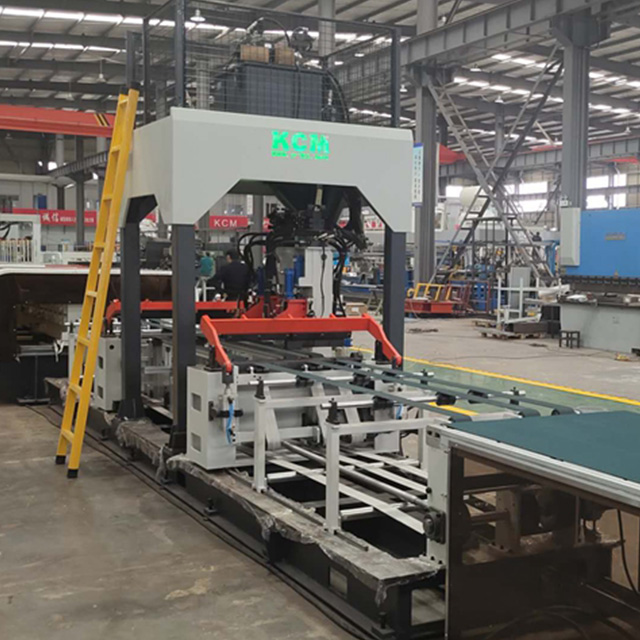
Initial Capital Expenditure (CAPEX) represents the largest barrier to entry for plant upgrades. Roll forming lines demand a massive upfront investment. You can generally only justify this expense through multi-year production runs of uniform refrigerator models. The heavy steel framework, custom rollers, and integrated shearing stations add up quickly.
Panel benders require lower initial CAPEX. They offer a much faster breakeven point for mid-volume manufacturers. You can purchase a high-end automated bender for a fraction of the cost of a full continuous line.
We must also examine tooling and changeover costs (OPEX). Operational expenses dictate your ongoing profitability.
The Roll Forming Risk centers entirely around fixed tooling. Once you machine the roller dies, their geometry cannot change. If your marketing department demands a new refrigerator design, you face a massive hurdle. A new radius requirement for a door edge means new roller dies must be engineered. You must then fabricate and install these new components. This process costs tens of thousands of dollars. Worse, it completely stalls production during the changeover period.
The Panel Bending Advantage lies in its flexibility. This equipment uses universal bending blades controlled by precise servos or hydraulics. The blades interpolate movements to create distinct angles and radii. Adjusting to a new refrigerator model requires a simple software update. You do not need to buy or install new physical dies. The programmer inputs the new 3D CAD file, and the machine adapts instantly.
Equipment Cost and Tooling Comparison Matrix
Evaluation Factor | Roll Forming Line | Automated Panel Bender |
|---|---|---|
Initial CAPEX | Very High | Medium to High |
Tooling Exclusivity | Part-specific custom dies | Universal standard blades |
Changeover Cost | Expensive (requires new machining) | Negligible (software update) |
Breakeven Volume | Extremely High (>300k units/year) | Medium (High mix environments) |
Every factory floor has hard physical limits. Spatial requirements dictate many procurement decisions before you even analyze cycle times.
A complete roll forming line requires extensive linear floor space. You must accommodate decoiling stations, punch presses, progressive forming rollers, and flying shears in a single straight line. This footprint often stretches across a significant portion of the facility. Finding this linear space proves difficult in older buildings.
A panel bender is comparatively compact. It utilizes a central bending hub surrounded by automated material handlers. This modular design makes it much easier to retrofit into existing brownfield facilities. You can place the machine in an alcove or align it alongside existing assembly cells.
Downtime and maintenance risks present another critical planning phase. You must protect your downstream assembly operations from starvation.
Roll forming lines suffer from a single point of failure risk. A material jam or mechanical failure anywhere on a continuous roll forming line halts the entire process. Downstream assembly cells quickly run out of U-shells. You lose overall factory output rapidly.
Facilities using multiple CNC panel benders enjoy inherent redundancy. If one machine requires unexpected maintenance, you simply reroute production. The remaining machines take up the slack. This strategy effectively mitigates total line stoppage. It keeps your assembly line fed and your operators working.
Best Practice: Always map your exact floor layout before requesting vendor quotes. Consider how raw material enters the cell and how finished parts exit to the painting line.
You need a reliable evaluation framework to guide your procurement shortlisting. We recommend using specific production thresholds to make your final choice.
Use these thresholds to guide your procurement decisions:
Choose Roll Forming if: You produce more than 300,000 identical units annually. Your core product designs remain locked for five or more years. You possess ample linear floor space to support decoiling and continuous feeding.
Choose Panel Bending if: You produce multiple distinct SKUs simultaneously. Your catalog includes French doors, side-by-side models, and compact units. Your batch sizes range from small to medium. Your facility layout requires modular automated manufacturing cells.
Many industry leaders now utilize the Hybrid Approach. They recognize the unique strengths of both systems. These manufacturers allocate standard U-shells entirely to a dedicated roll forming line. The high volume justifies the fixed tooling. Simultaneously, they dedicate modern CNC bending machines to highly customizable parts. This includes aesthetic exterior doors, interior crisper drawers, and varying structural back panels.
This hybrid strategy maximizes your capital efficiency. You achieve raw throughput where it matters most while retaining agility for consumer-facing design elements.
There is no universal "best" machine in modern appliance fabrication. You must identify the most mathematically sound choice for your specific operational demands. Plant managers must weigh raw speed against necessary agility. Investing in proper equipment requires mapping your five-year product roadmap against strict CAPEX limits and actual changeover realities. Do not base your decision on a single metric like cycle time.
Your next steps require detailed internal data collection. Conduct a precise time-study audit of your current line's changeover bottlenecks. Calculate the specific tooling replacement costs incurred over the last 36 months. Armed with these hard numbers, you can confidently request targeted RFQs from trusted equipment vendors.
A: No. Roll forming is a continuous process that is inherently faster per part. However, panel benders win in overall throughput when you factor in environments requiring frequent tooling changeovers across multiple SKUs.
A: Both technologies effectively handle pre-painted steel (PCM), galvanized steel, and stainless steel commonly used in appliance manufacturing. However, roll forming requires careful tooling calibration to avoid scratching pre-painted coils.
A: Roll forming is naturally automated from coil to cut. Panel benders require integration with automated loading/unloading systems (like robotic arms or suction gantries) to achieve true "lights-out" manufacturing.
A: Typically, no. The ROI for a dedicated line depends on high, continuous volume. Mid-sized manufacturers often find better cash flow and flexibility by utilizing high-end CNC panel benders.


