
English 

+86-158-5501-9595
leizhang112@126.com
leizhang112@126.com
No. 8, Lanzhou Road, Su-Chu Modern Industrial Park, Chuzhou City, Anhui Province


Views: 164 Author: Site Editor Publish Time: 2026-08-25 Origin: Site


Manufacturing a new plastic component brings inevitable choices. Selecting the right fabrication method shapes your entire production timeline. The stakes rise significantly when moving from initial concepts to final physical products. Product engineering and procurement teams often hit a critical juncture when scaling production: selecting a forming process that balances tooling budgets, lead times, and cosmetic requirements.
Both pressure forming and vacuum forming belong to the broader thermoforming family, but they serve drastically different operational needs and part complexities. Choosing incorrectly means wasting valuable time. It also forces engineers into stressful, expensive redesigns just before a product launch.
This guide strips away the marketing jargon to objectively compare both processes, helping you evaluate tooling costs, geometric limitations, and equipment investments to make a defensible manufacturing decision. We will explore how air pressure manipulation alters plastic behavior. By understanding these mechanical differences, you avoid costly retooling later. Let us dive into the core mechanics guiding these two vital manufacturing techniques.
Mechanism: Vacuum forming uses only negative pressure (vacuum) to pull heated plastic over a mold. Pressure forming adds high-pressure positive air to the unformed side, forcing the plastic into microscopic mold details.
Cost Dynamics: Vacuum forming requires significantly lower upfront tooling and equipment costs, while pressure forming requires heavier, temperature-controlled molds that cost more but remain cheaper than injection molding.
Detail & Precision: Pressure forming can achieve sharp features, textured surfaces, and tight undercuts. Vacuum forming is best suited for broader, less intricate geometries.
Equipment ROI: For in-house production or rapid prototyping, investing in a standard vacuum thermoforming machine yields a faster ROI, whereas pressure forming is typically outsourced to specialized facilities unless operating at high volumes.
The Process: We heat a sheet of thermoplastic until it becomes highly pliable. Common materials include ABS, polycarbonate, or high-impact polystyrene (HIPS). Operators then drape this hot plastic over a carefully designed mold. A powerful vacuum pulls the material tight against the tooling surface. To understand this fully, consider a step-by-step breakdown of the operation:
A rigid clamping frame secures the raw plastic sheet firmly in place.
Ceramic or quartz radiant heaters raise the plastic to its precise forming temperature.
The mechanical platform raises the mold upward into the sagging plastic sheet.
High-flow vacuum ports remove all trapped air instantly from beneath the sheet.
High-speed cooling fans reduce the temperature before operators eject the formed part.
Equipment Reality: The technique relies entirely on standard atmospheric pressure. This equals approximately 14.7 psi pressing down on the exterior plastic surface. Because the ambient force remains relatively low, you do not need massive clamping tonnage. Modern industrial and desktop equipment has become highly accessible to businesses of all sizes. Buying a reliable Vacuum Thermoforming Machine is often the backbone of low-to-mid volume manufacturing and packaging. These machines offer simple controls and robust longevity for continuous daily operation.
The Process: This technique follows the exact same initial steps as vacuum forming. We heat the sheet and raise the mold. However, it instantly applies massive positive air pressure to the back of the heated plastic while the vacuum pulls from below. This incoming pressure ranges from 20 to well over 100 psi.
This dual-action approach forces the plastic into microscopic mold details. It behaves much like stamping metal under heavy tonnage. We push the material into every crevice, radius, and texture present on the tool surface. The plastic has no choice but to conform perfectly to the intricate tooling face.
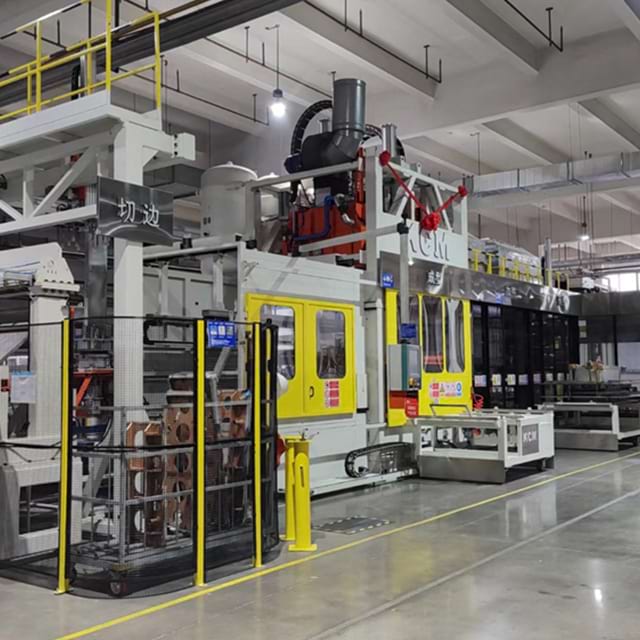
Equipment Reality: You cannot perform this operation on standard light-duty machines. It requires highly specialized, heavy-duty pneumatic presses. The system utilizes completely sealed pressure boxes capable of containing the compressed air safely. These thick metal enclosures lock down over the sheet during the rapid forming cycle. Best Practice: Always ensure your facility meets stringent industrial safety regulations before operating high-pressure pneumatic equipment. Untrained operators should never handle pressurized forming cells without rigorous safety protocols.
Vacuum Molds: These tools remain highly economical for nearly any manufacturing budget. Machine shops can mill them from basic wood or medium-density fiberboard (MDF). Engineers frequently use cast epoxy or 3D-printed resins for short production runs. This makes the method ideal for agile product iteration. You can test a physical design on Monday and revise the mold by Wednesday. The low atmospheric pressure places minimal stress on these softer, inexpensive materials.
Pressure Molds: These require high-grade, precision-machined aluminum molds. Because of the extreme psi applied during the process, molds must be perfectly rigid. They require significant structural reinforcement across their entire geometry. Furthermore, the rapid heat transfer demands internal water-cooling channels. These complex channels prevent the metal from warping over repeated thermal cycles. Common Mistake: A frequent error is attempting to use softer tooling materials for pressure forming. The intense blast of compressed air will crush or deform non-metallic molds instantly.
Barrier to Entry: Procuring a standard Vacuum Thermoforming Machine for in-house production is a viable CapEx for many mid-sized manufacturers and prototyping labs. Many teams easily justify this initial financial investment. The physical setup requires minimal facility modifications. Standard electrical drops and basic shop ventilation usually suffice. You can train assembly workers to operate these intuitive machines within a few days.
The Scalability Reality: Conversely, pressure forming equipment is extremely capital-intensive and requires significant footprint and utility upgrades. It demands a massive physical space on the factory floor. Facilities often need specialized upgrades to support industrial air compressors, high-capacity chillers, and robust electrical panels. For most businesses, pressure forming is treated as an outsourced operational expenditure (OpEx) rather than an in-house capability. Very few companies develop this specific core competency internally unless they exclusively produce thousands of high-end custom parts every month.
Pressure Forming: The high positive psi allows the heated plastic to capture exact mold textures flawlessly. We can achieve pebbled, leather-like, or matte finishes directly from the tooling surface. The process easily transfers embossed corporate logos and crisp geometric edges. In fact, a well-designed pressure-formed part is often indistinguishable from complex injection-molded parts. It provides class-A aesthetics for outward-facing medical equipment or commercial kiosks.
Vacuum Forming: This simpler technique produces smooth, generalized external contours. Texturing is difficult to achieve solely from the mold itself. The 14.7 psi atmospheric pressure simply cannot force the plastic into tiny surface deviations. Aesthetic finishes typically require pre-textured plastic sheets from the resin supplier. While effective for many applications, this limits your immediate design flexibility slightly.
Undercuts & Snap-Fits: Pressure forming supports highly complex mechanical features seamlessly. We can integrate molded-in brass inserts, ventilation louvers, and tight structural undercuts. Advanced aluminum tools use retractable pneumatic side-actions. These automated side-actions pull away to release complicated geometries immediately after the plastic cools.
Wall Thickness Distribution: Both processes face inherent challenges with material thinning on deep draws. Industry professionals refer to this common visual defect as webbing. However, pressure offers slightly better material control in deep crevices. The sudden blast of compressed air distributes the heated material more evenly before it freezes against the rigid tool surface.
Thermoforming Process Capabilities Comparison
Capability Metric | Vacuum Forming | Pressure Forming |
|---|---|---|
Tooling Material Options | Wood, MDF, Epoxy, 3D Resin | Machined Aluminum |
Applied Forming Pressure | ~14.7 psi (Atmospheric) | 20 - 100+ psi (Positive + Negative) |
Surface Texturing Method | Requires pre-textured plastic sheets | Molded-in textures (pebbled, matte) |
Undercuts & Complex Details | Limited mostly to broad features | Advanced sharp radii and crisp edges |
Typical Tooling Lead Time | Days to short weeks | 4 to 8 weeks |
Risk Mitigation: Before committing $10,000 or more to a pressure forming aluminum mold, engineering teams often mitigate their financial risks. They frequently use high-temperature 3D printed molds to validate part geometry and fitment first. They run these inexpensive test tools in a standard Vacuum Thermoforming Machine.
This iterative prototyping loop saves immense amounts of capital and frustration. You identify dimensional errors and mechanical interference issues early in the design phase. Once the form, fit, and function pass final engineering inspection, you confidently commission the final CNC-machined aluminum tool.
Speed to Market: Vacuum forming tools can be fabricated in a matter of days or short weeks. If you use a wooden or MDF buck, a skilled pattern maker finishes it rapidly. This swift turnaround dominates fast-moving consumer goods, automotive aftermarket parts, and rapid packaging sectors.
Pressure forming tools often require 4 to 8 weeks for complete CNC machining and testing. The complexity of routing internal water lines and ensuring airtight seal perimeters demands meticulous mechanical engineering. You must factor this significant delay into your overall product launch roadmap. Doing so helps avoid costly supply chain bottlenecks and missed delivery deadlines.
Honest Assessment: Many aggressive sales brochures tout pressure forming as a direct, universal replacement for injection molding. We must evaluate this claim carefully. While pressure forming rivals injection molding in pure exterior aesthetics, it cannot match its sheer volume speed. It will never achieve injection molding's rapid cycle times for individual parts.
Furthermore, the per-part cost scales poorly at production volumes exceeding 10,000 to 20,000 units per year. Use pressure forming strategically to bridge the gap between initial product launch and mass market adoption. Do not treat it as a permanent high-volume manufacturing solution for millions of identical units.
You should gravitate toward this agile method if your product aligns with these specific operational realities:
Your product is a large structural cover, handling tray, automotive dunnage, or internal component where high cosmetic detail is unnecessary.
You operate under a strict, highly limited tooling budget.
You are running low volumes (100 - 5,000 parts) or testing a brand-new market segment.
You need rapid speed-to-market for a seasonal or fast-moving consumer product.
You intend to bring production completely in-house using an accessible Vacuum Thermoforming Machine.
Select this advanced pneumatic technique when your project demands premium aesthetics alongside moderate production volume:
You are manufacturing highly visible, aesthetic medical device covers, interactive kiosk housings, or premium scientific instrument panels.
Your specific part geometry requires sharp radii, distinct molded-in branding, or complex mechanical undercuts.
Your production volume sits directly in the "mid-tier" sweet spot (1,000 - 10,000 parts annually).
Injection molding steel tooling costs remain completely impossible to amortize at your current business scale.
Neither process is objectively superior; they serve different points on the vast manufacturing spectrum. Vacuum forming champions extreme cost-efficiency and agile speed. Meanwhile, pressure forming gracefully bridges the gap between basic thermoforming and high-end injection molding. Both deserve a strategic place in modern product development.
To move forward effectively, consider these actionable next steps:
Audit your CAD files immediately to check for proper draft angles and unexpected mechanical undercuts.
If you remain uncertain about future volume projections, start with vacuum-formed prototypes before escalating to pressure-formed production tooling.
Consult with your trusted manufacturing partner to determine if pre-textured plastic sheets can eliminate the need for costly textured aluminum molds.
Evaluate your internal facility space and utility capacities before assuming you can safely bring high-pressure pneumatic systems in-house.
A: No. Standard vacuum machines lack the sealed pressure boxes, heavy-duty clamps, and pneumatic systems required to safely introduce 20–100 psi of positive air pressure. Attempting to modify a standard machine for this purpose poses severe safety hazards.
A: Yes, regarding upfront tooling. It is often 60–80% cheaper than injection molding steel tools. However, the piece-part price in pressure forming is typically higher. It is most cost-effective for mid-volume runs where tooling amortization matters most.
A: Vacuum forming is significantly better for rapid prototyping. It gives you the ability to use inexpensive, easily modified tooling materials like 3D-printed polymers, cast epoxy, or basic MDF to test geometries quickly.


