
English 

+86-158-5501-9595
leizhang112@126.com
leizhang112@126.com
No. 8, Lanzhou Road, Su-Chu Modern Industrial Park, Chuzhou City, Anhui Province


Views: 151 Author: Site Editor Publish Time: 2026-08-29 Origin: Site


Vendors and manufacturers often throw around technical terms interchangeably. This creates massive confusion when you try to buy new production equipment. You might hear "thermoforming" and "vacuum forming" used as exact synonyms. They definitely mean entirely different things in an engineering context. One term represents a broad manufacturing category. The other refers to a highly specific process beneath it. Failing to understand this distinction complicates equipment procurement significantly. It also inflates your tooling budgets unnecessarily. We will clarify these technical differences immediately. Production managers and buyers can then specify the exact equipment they need. You will learn how to avoid overpaying for unneeded machine capabilities. We will also help you accurately forecast your upcoming tooling investments.
Thermoforming is the parent category; vacuum forming is the simplest, most common subset of that category.
Vacuum forming relies solely on negative pressure to shape plastic, making it highly cost-effective for large, low-detail parts.
Other thermoforming methods (like pressure forming) use compressed air to achieve injection-molding-level details, but require higher tooling investments.
Choosing the right vacuum thermoforming machine depends on your required cycle times, material thickness, and part tolerance criteria.
Defining the baseline terminology stops miscommunication instantly. Thermoforming serves as the foundational umbrella category. The process always begins by heating a solid thermoplastic sheet. You heat it until it becomes perfectly pliable. Next, you shape the softened sheet over a custom mold. Finally, you trim the cooled product to its finished dimensions. This broad category covers multiple distinct shaping methods. Common materials include ABS, HIPS, and Polycarbonate. Each material behaves differently under heat. You must master temperature control regardless of the specific shaping method.
We must then define the specific subset. Vacuum forming operates strictly inside the broader thermoforming family. This technique uses only a vacuum, or suction, to manipulate the plastic. It pulls the heated plastic sheet down tightly against the mold. No compressed air pushes from above. No mechanical presses stamp the material. The equipment simply evacuates the trapped air between the plastic and the tool. This creates a pressure differential. Atmospheric pressure then pushes the plastic flat against the mold surface.
Why does this persistent terminology confusion exist? Vacuum forming dominates the global plastics market. Manufacturers use it constantly for packaging, signs, and enclosures. The terms eventually became completely synonymous in casual factory conversation. However, precision matters deeply during equipment procurement. If you request quotes from contract manufacturers, ambiguous terms cause wild pricing variations. Using precise terminology ensures you receive accurate estimates. It also matters immensely when evaluating a Vacuum Thermoforming Machine. Vendors need exact specifications to match your unique production goals. Asking for a "thermoformer" might result in quotes for heavy-duty pressure machinery you simply do not need.
Understanding alternative approaches requires comparing underlying mechanics. We must look closely at how each method forces plastic against a tool. Different forces create drastically different results.
Vacuum forming operates under a strict physical limitation. It relies entirely on negative pressure generation. This means the maximum forming force equals standard atmospheric pressure. You get approximately 14.7 psi pulling the heated sheet down. You cannot increase this pulling force. Therefore, the plastic only bends around broad shapes. Intricate details remain impossible to capture effectively.
Pressure forming takes a significantly more aggressive route. It combines basic vacuum suction from below and adds intense positive air pressure. Specialized equipment pushes air down from above the sheet. This positive pressure can easily reach up to 100 psi. The plastic forces itself violently into every tiny crevice of the mold.
These distinct mechanical differences drive very different aesthetic and structural outcomes. Vacuum forming naturally yields softer radii. It creates general, sweeping contours across the part surface. You cannot achieve perfectly sharp corners. Pressure forming delivers highly crisp edges. You can achieve zero-draft profiles easily. It even copies complex, sharp textures mimicking traditional injection molding perfectly.
Tooling costs vary significantly between these two processes. Pressure forming tooling costs noticeably more. Molds must endure high positive pressure without warping, bending, or breaking apart. Toolmakers often cast these robust molds from heavy aluminum. Conversely, standard vacuum forming allows lighter, less expensive mold materials. Both methods still remain drastically cheaper than cutting hardened steel tools for injection molding.
Table 1: Process Comparison: Vacuum vs. Pressure Forming
Process Feature | Vacuum Forming | Pressure Forming |
|---|---|---|
Mechanism | Negative pressure (suction) only | Vacuum plus positive compressed air |
Maximum Force | ~14.7 psi (Atmospheric limit) | Up to 100 psi |
Detail Level | Soft radii, broad contours, limited detail | Sharp corners, crisp textures, deep draws |
Tooling Expense | Lowest investment requirement | Moderate investment requirement |
Mold Materials | Wood, MDF, Epoxy, Aluminum | Heavy-duty Cast or Machined Aluminum |
Operations managers often face a very specific business problem. You need to transition smoothly from low-volume prototyping to medium-volume production. Buying heavy-duty injection molding equipment ruins capital efficiency immediately. In these transitional scenarios, a standard Vacuum Thermoforming Machine offers the most sensible financial solution. It scales production without demanding massive upfront capital.
Several ideal use cases highlight where this specific process shines brightest. Industry leaders deploy this technology for highly specific product categories.
Large-format enclosures: Radomes, automotive dash panels, and large machinery covers fit perfectly.
Cost-sensitive packaging: Clamshells, blister packs, and custom dunnage trays require minimal surface detail.
Single-sided aesthetic requirements: Applications where a Class-A surface finish is only required on the non-mold side.
You must rigorously validate specific success criteria before moving forward. Evaluating part designs early prevents disastrous production runs. Follow these structured steps to guarantee success.
Analyze part depth-to-draw ratios: Ensure the vertical depth does not exceed the horizontal width aggressively. Extreme depths stretch the plastic until it tears apart.
Calculate necessary draft angles: Industry standards universally suggest 3 to 5 degrees of draft. Straight vertical walls trap the plastic permanently on the mold.
Predict wall thinning locations: As the vacuum stretches the plastic, it naturally thins out around deeper corners. You must verify structural integrity remains intact at these thinnest points.
Designing parts entirely around these physical realities ensures long-term manufacturing success. It also maximizes the output efficiency of your machinery.
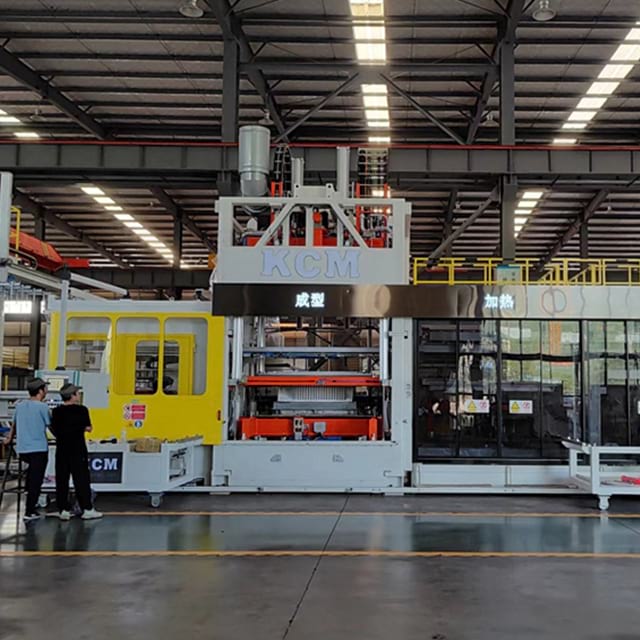
Choosing the correct tooling material strictly dictates your production scale capabilities. Prototyping demands blazing speed and low expense. Engineers routinely machine prototype molds from wood or medium-density fiberboard (MDF). These softer materials degrade quickly under continuous heat. However, they work perfectly for testing preliminary designs.
Short production runs require much more durability. Manufacturers typically turn to epoxy or cast aluminum. High-volume runs demand temperature-controlled machined aluminum tooling. These advanced molds include complex internal cooling channels. Pumping cool water through these channels regulates temperatures precisely. This active cooling significantly reduces cycle times and boosts daily yield.
Hidden production risks frequently disrupt new product launches. You must watch out for webbing during the forming stage. Webbing happens when excess material folds over itself. The vacuum pulls the fold tight, ruining the part. Using a plug assist mechanism often solves this problem. Chilling marks present another common failure mode. They occur when hot plastic hits a cold mold too fast. Pre-heating the mold surface eliminates chilling marks effectively. Finally, improper material distribution creates weak structural spots. Fine-tuning heater zones prevents this uneven stretching.
Material yield presents another harsh economic reality. The vacuum process inevitably generates significant edge-trim waste. You must clamp the sheet tightly around the perimeter edges. This leaves wide, unused plastic borders on every single part. Highly successful manufacturers integrate recycling systems directly into their production lines. Regrinding and reusing edge scrap maintains highly favorable unit economics. Without a recycling strategy, material costs erode profit margins rapidly.
You must evaluate highly specific technical criteria before purchasing new equipment. Heating zoning and control rank absolutely highest on this evaluation list. Advanced, multi-zone quartz or halogen heaters prove hyper-critical for success. These advanced elements prevent material sagging during the heating phase. They also guarantee even thickness across complex, multi-level part geometries. Independent zone control allows operators to direct extra heat exactly where needed.
You continually need to balance the maximum forming area against your factory footprint. Large sheet sizes sound incredibly appealing on paper. However, they demand massive floor space. They also require heavy utility upgrades. Ensure your current electrical and pneumatic infrastructure can actually handle the power load. Buying an oversized machine wastes floor space and limits factory mobility.
Automation levels dictate your daily production output severely. Prototyping labs often use manual or semi-automatic machines successfully. Operators load and unload sheets by hand. Conversely, packaging manufacturers rely heavily on continuous inline roll-fed systems. These highly advanced systems pull thin-gauge materials directly from giant spools. They run at blisteringly fast cycle speeds, generating thousands of parts hourly.
Your absolute next-step action involves expert technical consultation. We strongly recommend auditing your current part designs with an applications engineer. Execute this audit before finalizing any machine specifications or tonnage requirements. An experienced engineer will spot potential webbing issues instantly. They will also flag insufficient draft angles immediately. Consulting experts prevents catastrophic procurement mistakes.
We established clearly that all vacuum forming functions as thermoforming. However, not all thermoforming equates to vacuum forming. The broader category contains multiple specific techniques.
Matching the specific process to your exact part geometry remains crucial. Do you need crisp details, or just basic contours? This matching process stands as the single biggest factor in maximizing your investment return. Using vacuum technology for high-detail parts leads to failure. Using pressure technology for simple packaging wastes money.
Do not guess which capability you need for your facility. Contact a technical sales representative today. Review your part drawings together. Determine the exact machine specifications required to optimize your production line flawlessly.
A: Yes, hybrid machines definitely exist in the market. However, they require significantly heavier steel frames to withstand immense positive pressure. This structural requirement increases the initial capital expense drastically. Standard vacuum formers simply cannot handle high positive air pressure without blowing apart.
A: Standard machines typically handle material thicknesses up to 0.5 inches (12mm). When processing materials thicker than 0.25 inches, you generally require dual-sided heating capability. Top and bottom heaters ensure the thick core reaches a pliable state without scorching the outer surface.
A: Uneven wall thickness usually stems from three common issues. Improper heat zoning causes the plastic to stretch inconsistently. A lack of plug assist allows material to thin out rapidly in deep cavities. Finally, inadequate draft angles trap material prematurely during the pull.
A: It remains highly cost-effective for low-to-medium volumes. The primary advantage comes from vastly cheaper tooling costs. Making an aluminum mold costs a fraction of cutting hardened steel. However, at truly massive, multi-million part scales, the faster cycle times of injection molding eventually win out.


